

78° 13' 27.3" N 15° 37' 58.9" E
It’s warm and cosy inside the northernmost petrol station in the world. You can buy sandwiches and hot dogs, plus the usual necessities: power saws, machetes and huge snow shovels. There are helmets on the shelves, and four-kilo winter boots for dashing through the frozen fjords if need be. Two snowmobiles are parked by the fuel pump. The motorised sleds are padded with reindeer fur. Rifles hang from the seats.
Omid, the station attendant, points to a photo beside the door. It shows a polar bear chasing a man around a 4x4. ‘That was in Alaska’, Omid explains. ‘But it can happen here too. The polar bears live right behind the town.’
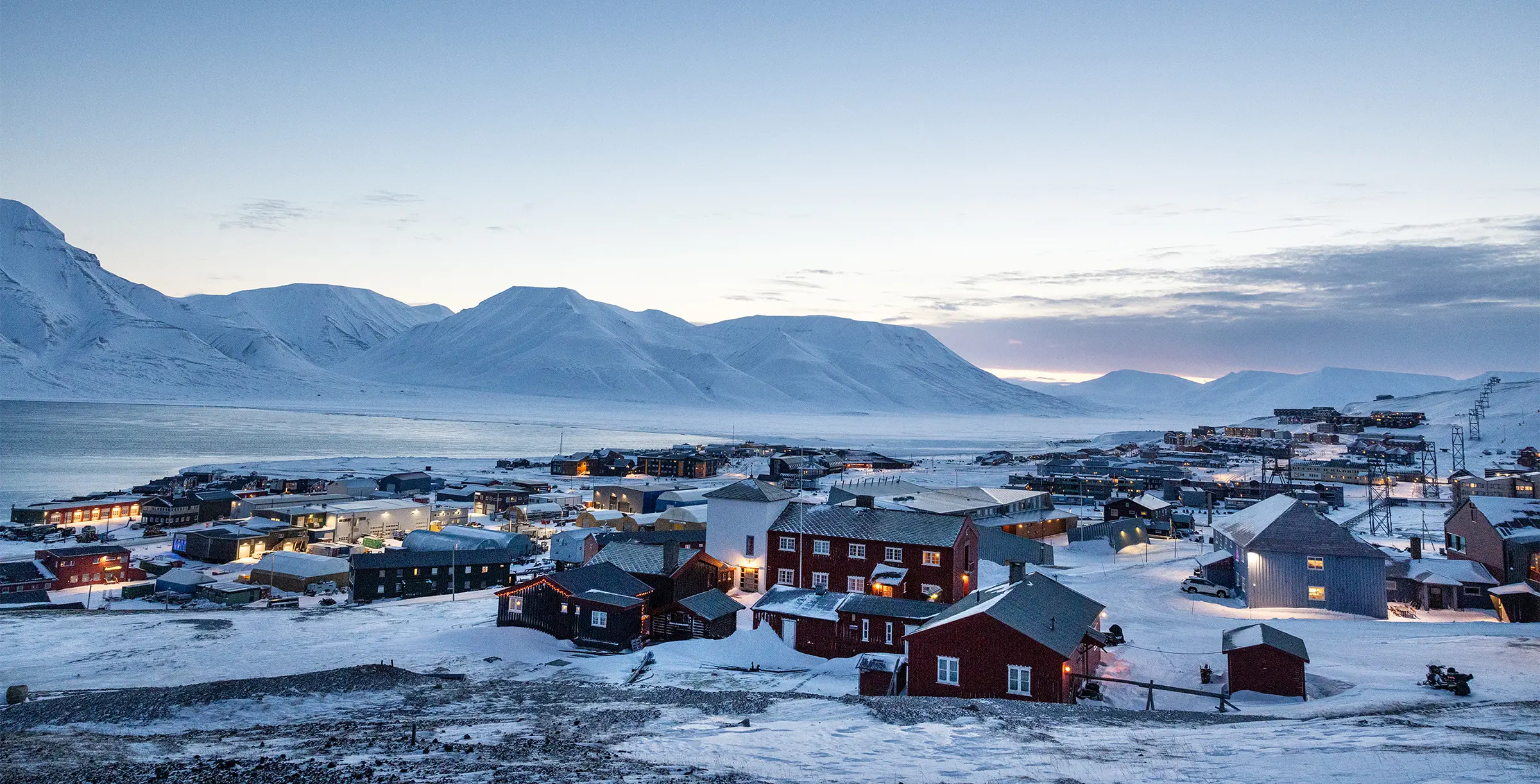
The Wild West was one thing. The Wild North is something completely different. Small wonder: Svalbard, formerly Spitsbergen, is the gateway to the northernmost end of the earth. Not much comes after it, apart from frozen wasteland, squalls and the grey Arctic Ocean.
From here, explorers such as Roald Amundsen and Fridtjof Nansen set off in search of the North Pole, only to return weeks later with frozen fingers and scurvy.
Omid, the station attendant, points to a photo beside the door. It shows a polar bear chasing a man around a 4x4. ‘That was in Alaska’, Omid explains. ‘But it can happen here too. The polar bears live right behind the town.’
The Wild West was one thing. The Wild North is something completely different. Small wonder: Svalbard, formerly Spitsbergen, is the gateway to the northernmost end of the earth. Not much comes after it, apart from frozen wasteland, squalls and the grey Arctic Ocean.
From here, explorers such as Roald Amundsen and Fridtjof Nansen set off in search of the North Pole, only to return weeks later with frozen fingers and scurvy.
They’re not all in the same boat in Svalbard, but rather all in the same chest freezer at the end of the world.
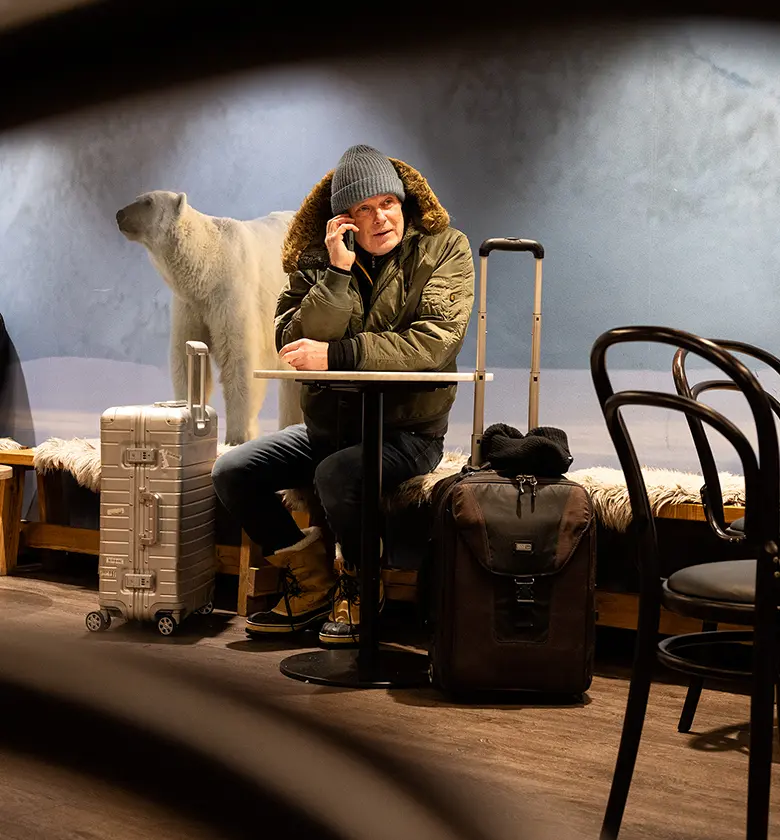
Omid Abolhasani is part of the experiment, you could say. Being Iranian, he is one of nearly 50 nationalities that live here together. A rare alliance of fewer than 3,000 people in one small space. And an extraordinary example of diversity – on the threshold to the Arctic, far outside any ordinary person’s comfort zone.
But perhaps these harsh conditions are precisely what bring people together: the dark polar nights, the solitude and the rough wilderness.
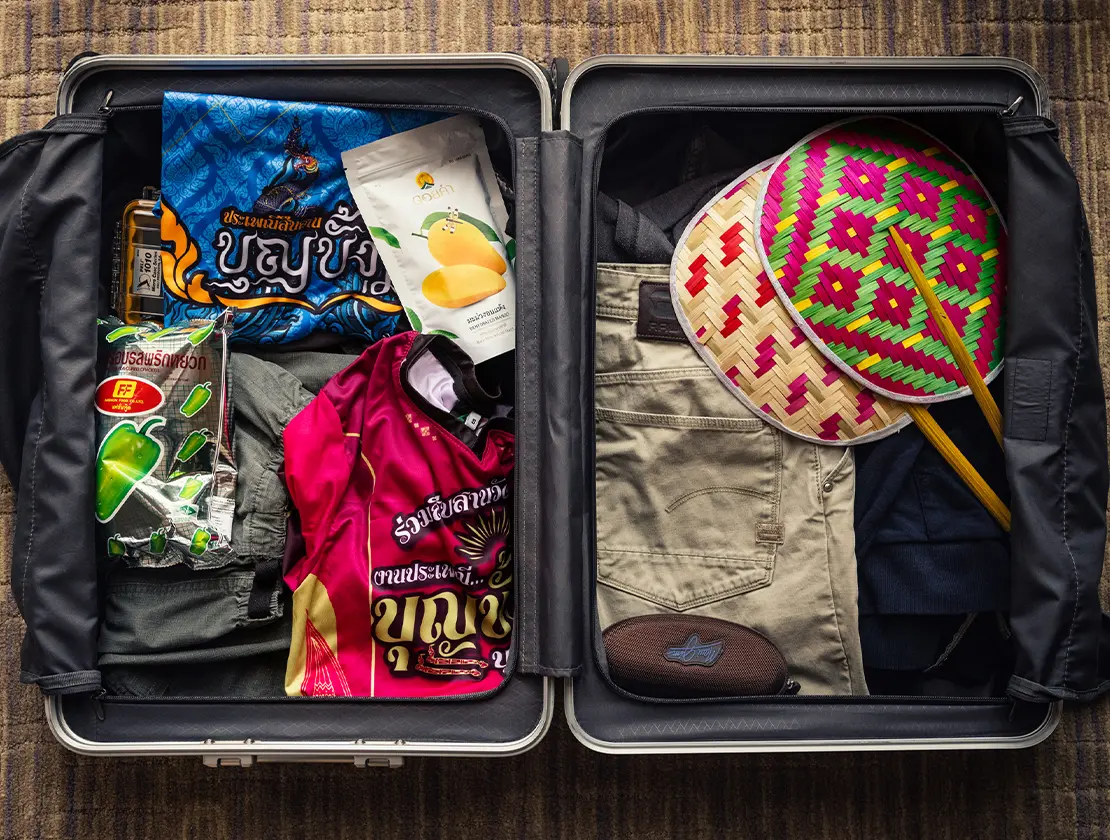
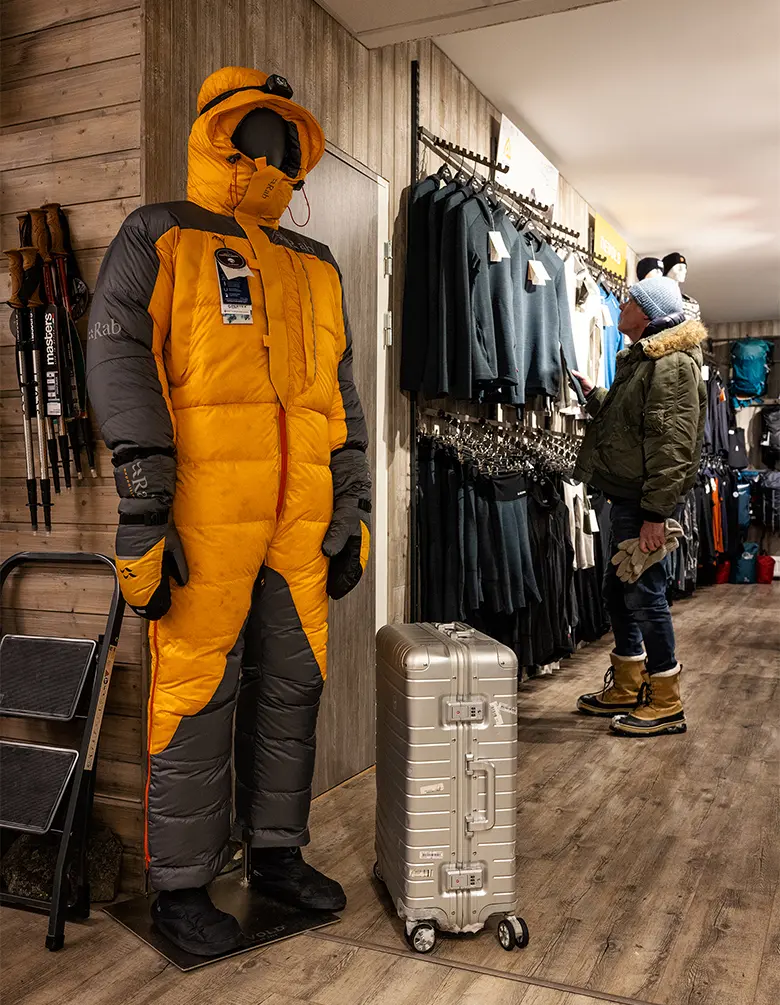
Svalbard is home to people from Australia, Thailand, Vietnam, Spain and Germany. Pakistani technicians earn a living here, Canadian snow researchers, Norwegian innkeepers. Polish snowcat drivers bump into Philippine hotel staff in the supermarket, or Paulina from Hungary, who sells bobble hats and hand and body warmers to freezing customers in her outdoor shop.
They’re not all in the same boat in Svalbard, but rather all in the same chest freezer at the end of the world.
But perhaps these harsh conditions are precisely what bring people together: the dark polar nights, the solitude and the rough wilderness.
Svalbard is home to people from Australia, Thailand, Vietnam, Spain and Germany. Pakistani technicians earn a living here, Canadian snow researchers, Norwegian innkeepers. Polish snowcat drivers bump into Philippine hotel staff in the supermarket, or Paulina from Hungary, who sells bobble hats and hand and body warmers to freezing customers in her outdoor shop.
They’re not all in the same boat in Svalbard, but rather all in the same chest freezer at the end of the world.
The Wild West was one thing. The Wild North is something completely different.
This remarkable place has grown in importance for other reasons too. Svalbard is a trailblazer in various ways. Scientists from over 30 nations use the University Centre in Svalbard for field studies, it has become an important hub for studying climate change. Hundreds of projects are launched here, enormous amounts of data come together under one roof. Svalbard, the end of the world? Hardly! This is where studies are done on new findings and breakthroughs of global urgency. How fast is the ice melting? How are ecosystems changing?
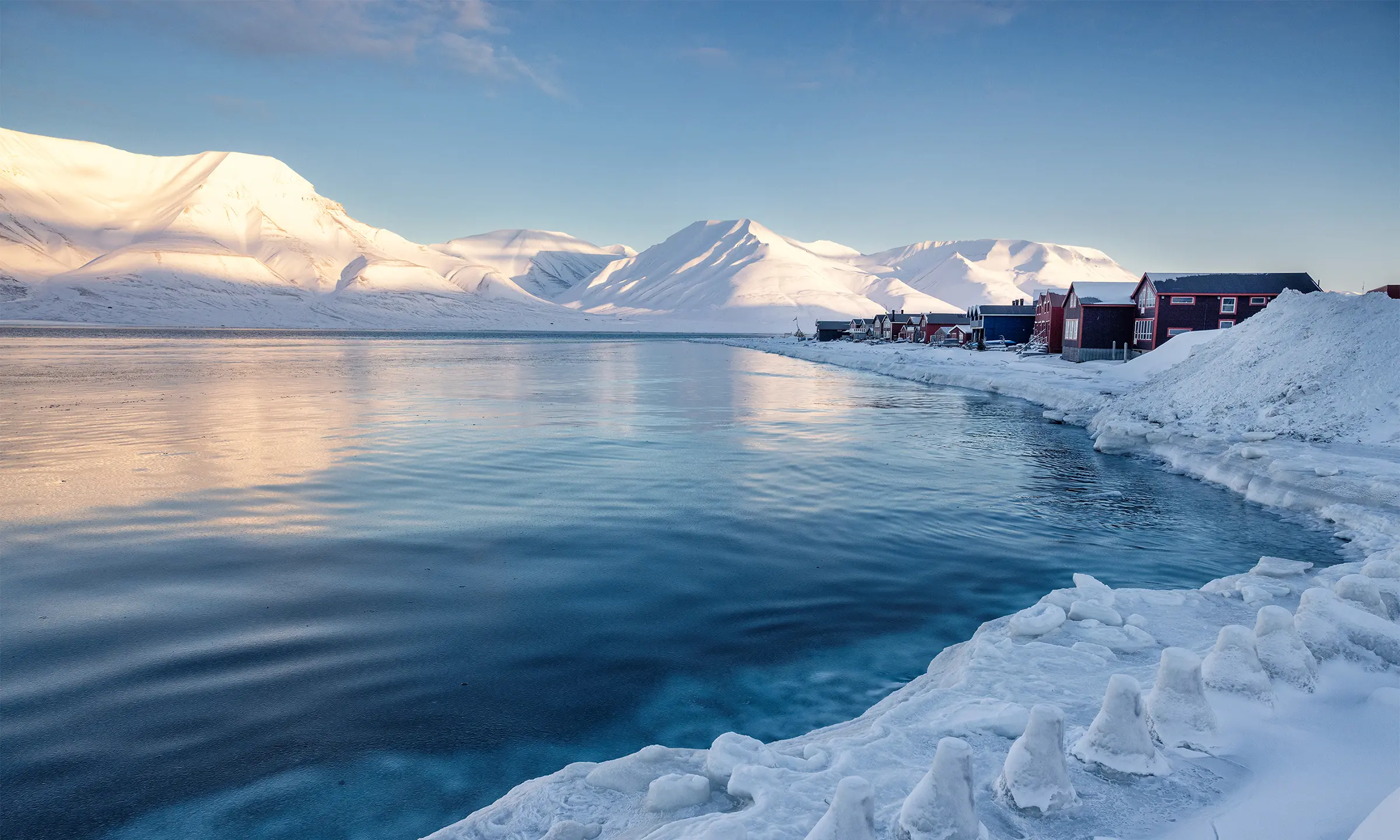
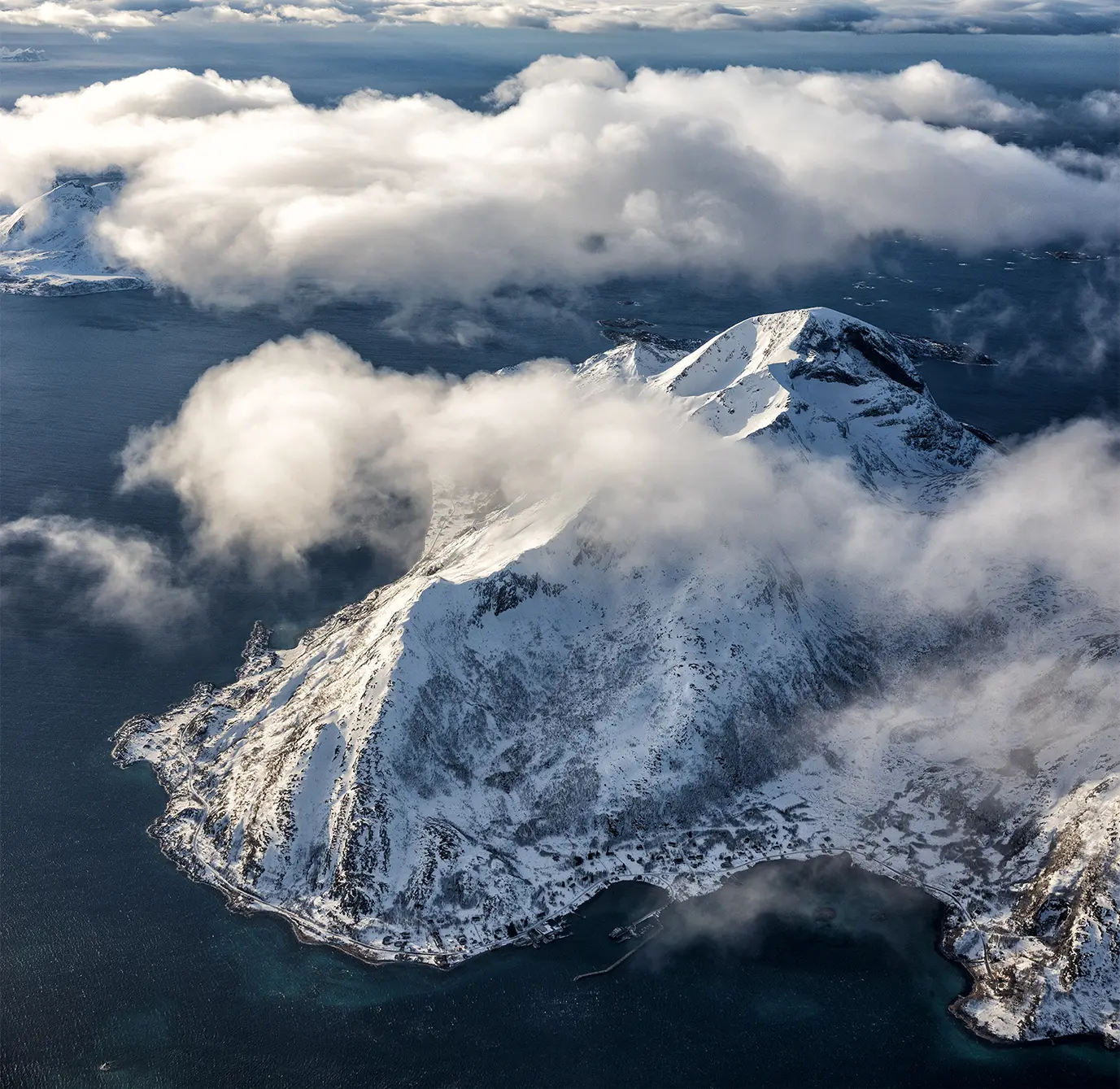
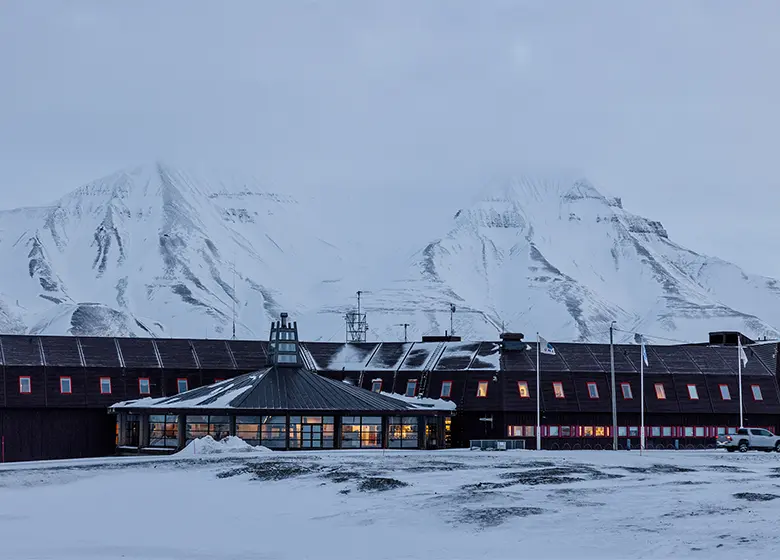
On the university’s doorstep: the wild beauty of nature. Snow-white mountains. Dips and valleys beneath the sun like a world covered in powered sugar.
On the university’s doorstep: the wild beauty of nature. Snow-white mountains. Dips and valleys beneath the sun like a world covered in powered sugar.
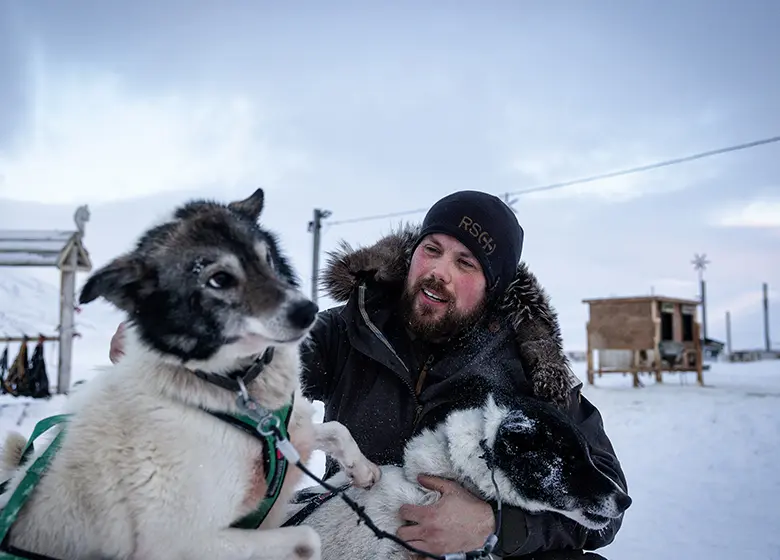
The wilderness has a become a stage for contemporary research. But it still draws adventurers. For instance, husky master Audun Salte, who lives outside the gates of Longyearbyen on a farm with his family and 135 dogs. He spends up to ten hours a day outdoors in the icy wasteland with his dogs, taking visitors to the glaciers and ice caves beyond Krekling Pass.
Follow us and don’t miss a story


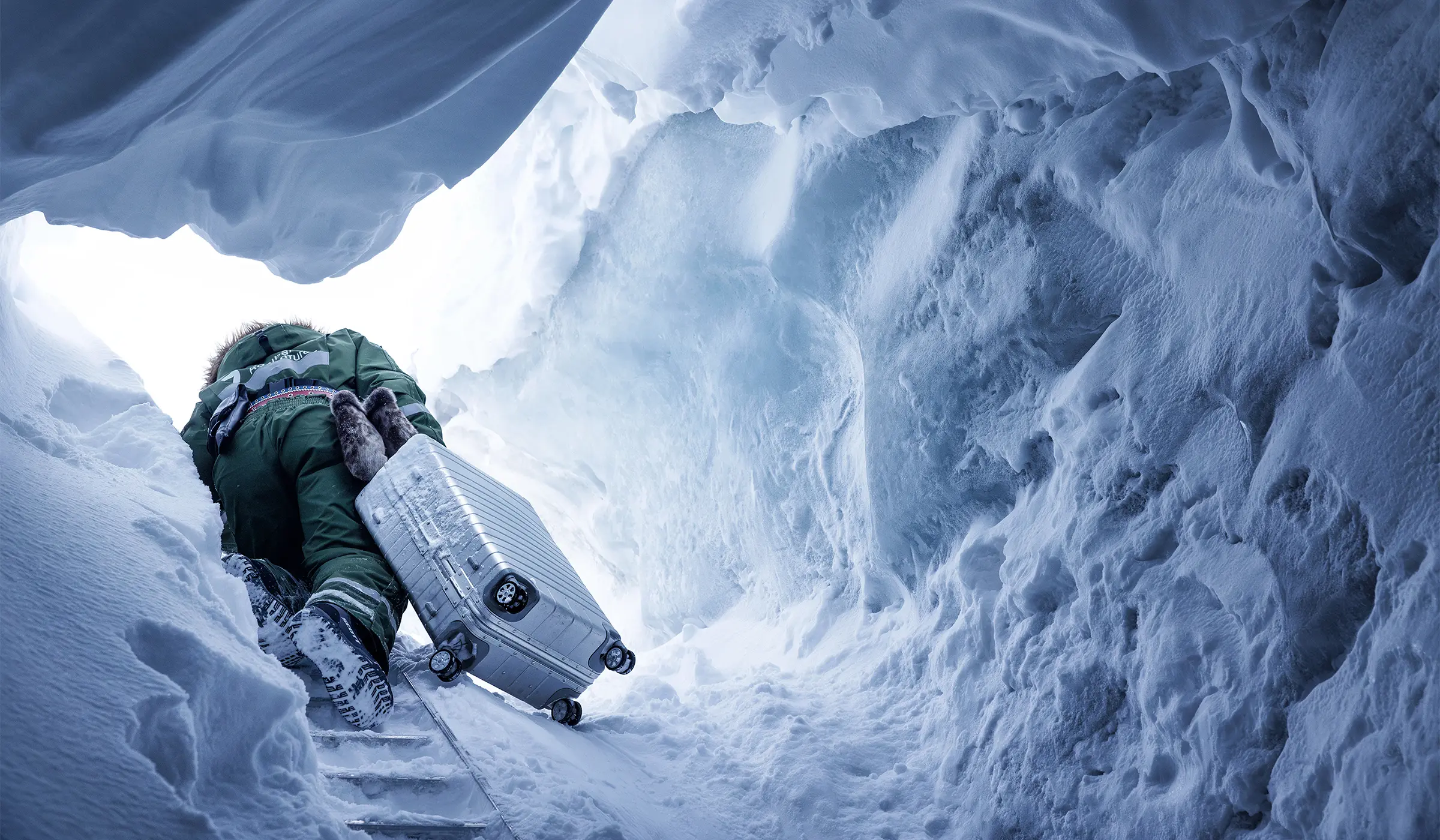
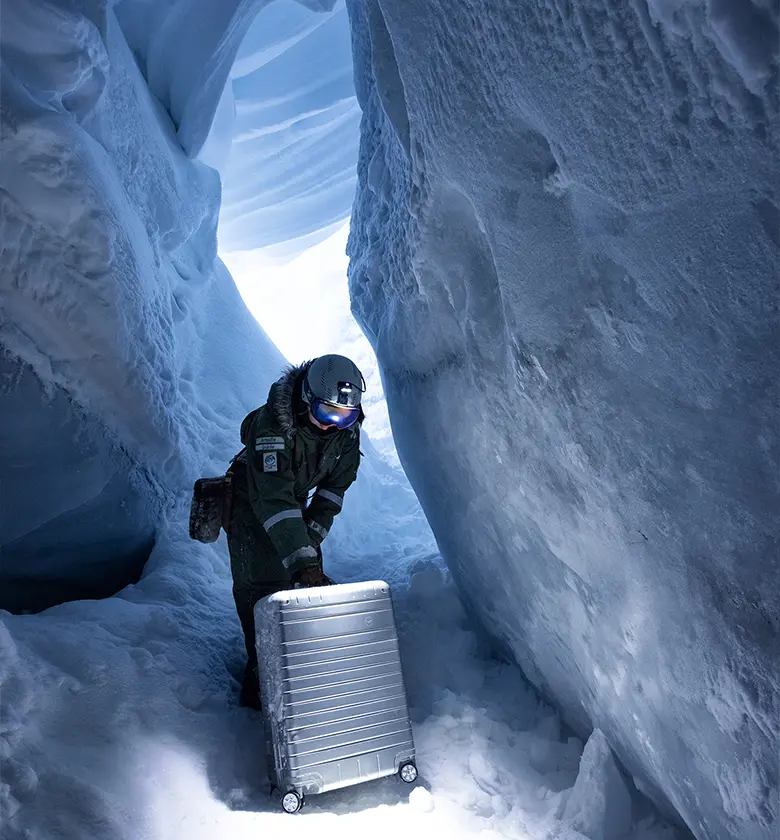
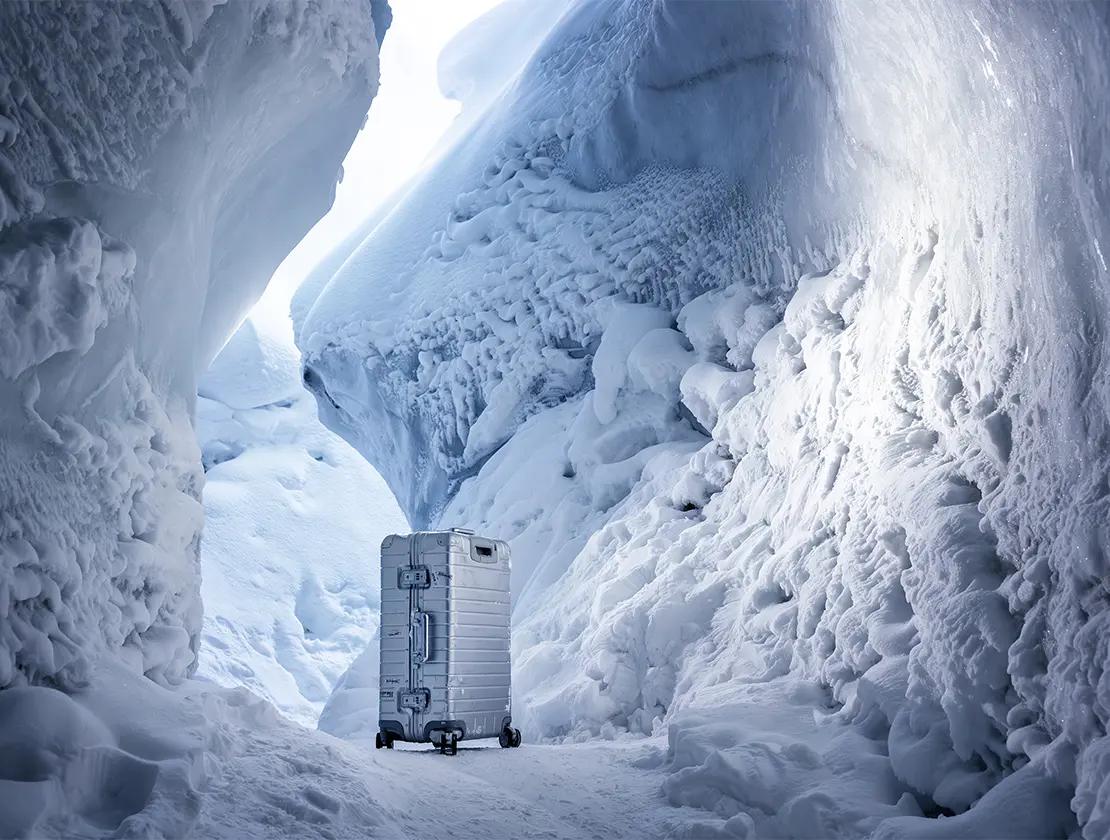
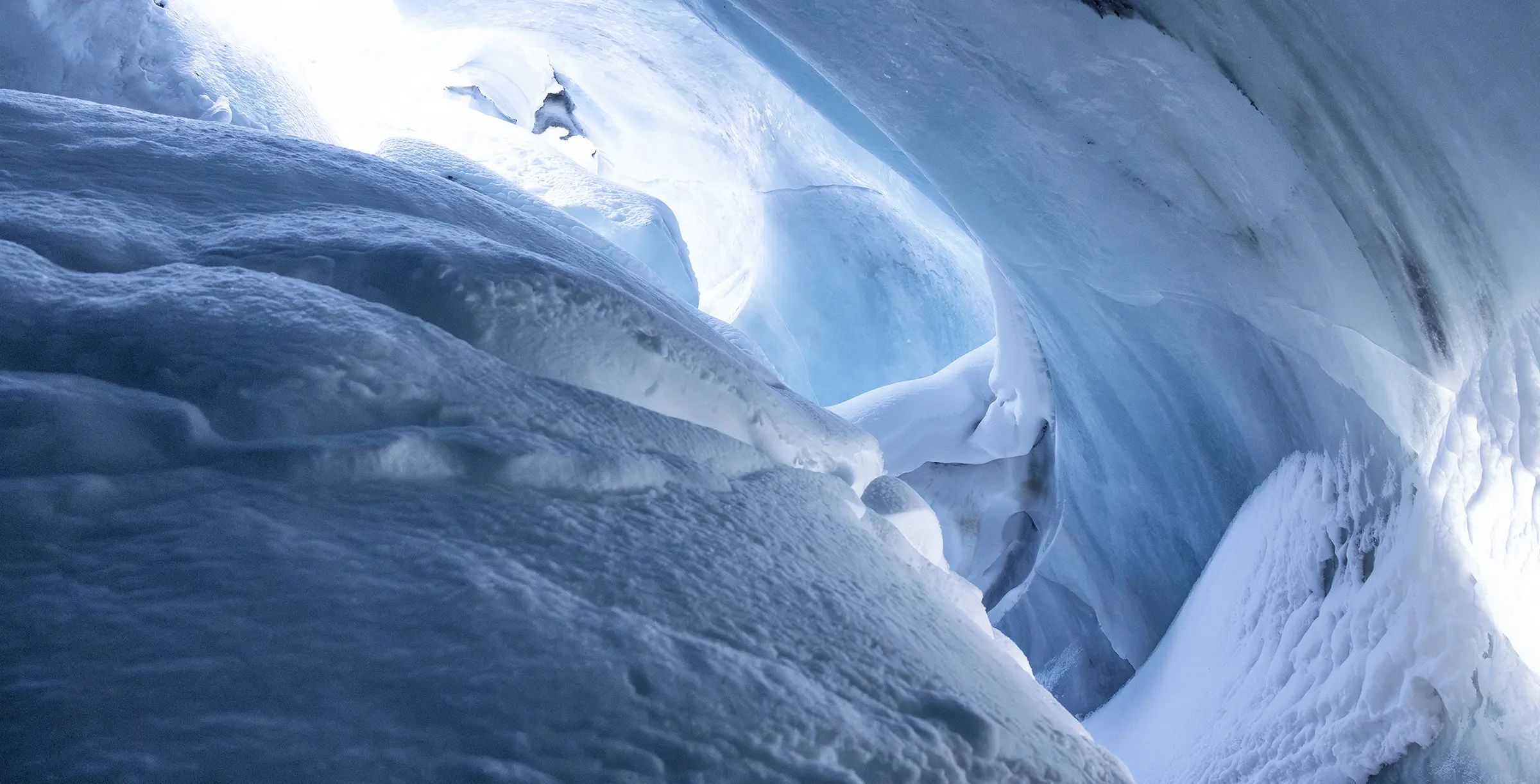
Siljebråten stops at a cave in the middle of no man’s land. A cleft in the rock, leading to the centre of the white earth. Below, a subterranean marvel: a cathedral of ice frozen into millions of patterns. This is what she wants visitors to see. The magical, the miraculous. One of those rare places where the planet’s unbroken magnificence can still be experienced.
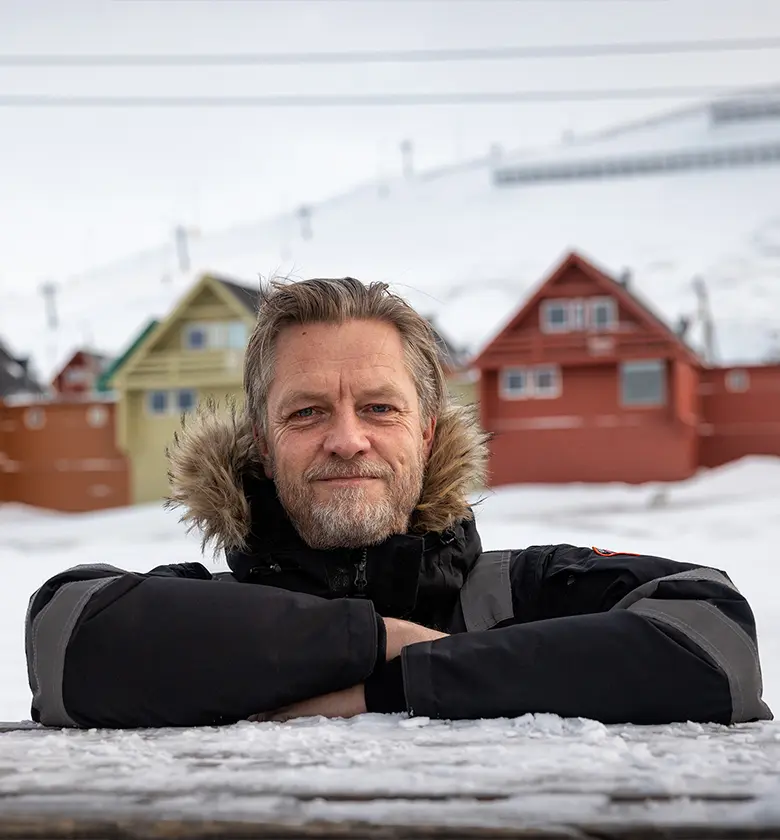
But the modern age is no stranger to this ancient natural landscape. Which is also part of what is happening in the Arctic. No one knows this better than Terje Aunevik, the mayor of Longyearbyen. He sits behind his desk on the first floor of the town hall, shoes off, wearing grey woollen socks.
Aunevik, 56, talks about the transformations Svalbard is going through. About expanding Svalbard’s role as a research hub. About tourism, and not allowing it to get out of hand. And about turning geothermal power into a new source of energy. ‘All of the houses and flats here are connected’, says the mayor.
But the modern age is no stranger to this ancient natural landscape. Which is also part of what is happening in the Arctic. No one knows this better than Terje Aunevik, the mayor of Longyearbyen. He sits behind his desk on the first floor of the town hall, shoes off, wearing grey woollen socks.
Aunevik, 56, talks about the transformations Svalbard is going through. About expanding Svalbard’s role as a research hub. About tourism, and not allowing it to get out of hand. And about turning geothermal power into a new source of energy. ‘All of the houses and flats here are connected’, says the mayor.
Svalbard is one of the hottest destinations on the planet.
It’s quite obvious that Svalbard can serve as a model for bigger projects. ‘We’re far away from the rest of the world’, the mayor says. ‘Living off-grid, with no connection to existing networks, no energy coming from elsewhere. If we can provide for ourselves out here, it has to be possible everywhere.’
Svalbard is forward-looking in other ways too. In wintertime, blues and jazz festivals attract international musicians to the Arctic. The proceeds from alcohol sales flow into a fund that is used exclusively to promote art and culture. This is how the centre for artists in residence came about, the new school theatre.
‘No, no’, says Aunevik. ‘It’s never boring up here.’ In the afternoon, he takes a walk through town. A deep blue sky stretches out beyond the mountains, the lights in the streets and houses are just beginning to go on. It’s minus 15 degrees outside. Aunevik is wearing an anorak and jeans, no hat, and astonishingly thin sneakers. At least he pulls his collar up. His breath escapes, rising like a cloud above his head. The mayor of Svalbard continues his walk in this freezing cold place at the end of the earth.
He needs it, he says. Otherwise, he can’t think. Every evening, for an hour, he takes the ice-cold polar air.
Svalbard is forward-looking in other ways too. In wintertime, blues and jazz festivals attract international musicians to the Arctic. The proceeds from alcohol sales flow into a fund that is used exclusively to promote art and culture. This is how the centre for artists in residence came about, the new school theatre.
‘No, no’, says Aunevik. ‘It’s never boring up here.’ In the afternoon, he takes a walk through town. A deep blue sky stretches out beyond the mountains, the lights in the streets and houses are just beginning to go on. It’s minus 15 degrees outside. Aunevik is wearing an anorak and jeans, no hat, and astonishingly thin sneakers. At least he pulls his collar up. His breath escapes, rising like a cloud above his head. The mayor of Svalbard continues his walk in this freezing cold place at the end of the earth.
He needs it, he says. Otherwise, he can’t think. Every evening, for an hour, he takes the ice-cold polar air.